







Brazil’s coffee production is deeply influenced by the country’s diverse geography, which spans tropical lowlands, rolling hills, and high-altitude plateaus. Factors such as altitude, climate, soil type, and topography play a critical role in determining the choice of coffee varieties, farming techniques, and production efficiency across different regions.
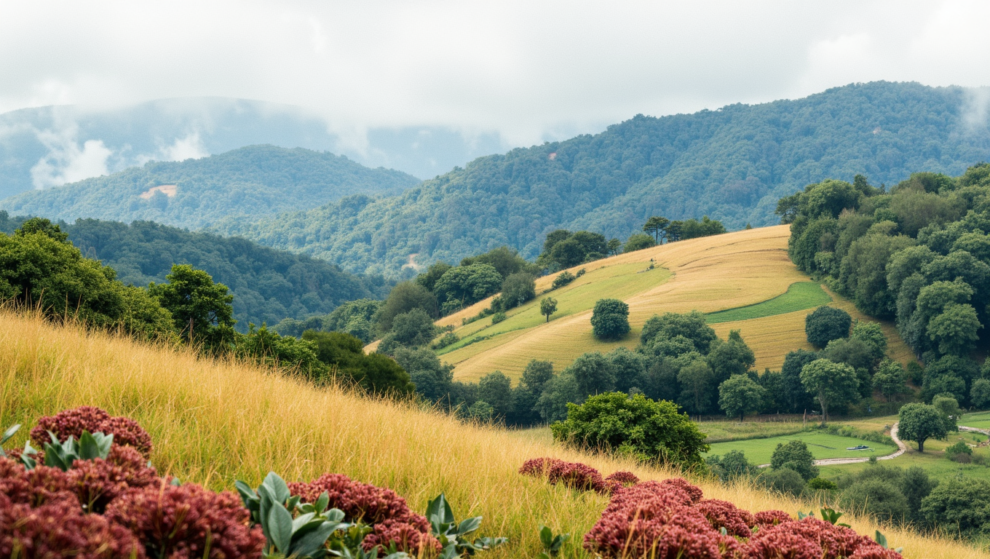
High-altitude regions like Sul de Minas, Mantiqueira de Minas, and parts of São Paulo are ideal for cultivating Arabica coffee. The cooler temperatures, well-drained soils, and pronounced diurnal temperature variation enhance bean quality, producing coffee with complex flavors and desirable acidity. In these areas, smallholder and semi-mechanized farms often dominate, relying on selective hand-picking to ensure only ripe cherries are harvested, as mechanized harvesting is less feasible on steep slopes.
Conversely, the flatter terrains of the Cerrado Mineiro region support large-scale, fully mechanized plantations. Here, expansive farms can employ machines for planting, pruning, and harvesting, significantly increasing efficiency and reducing labor costs. The region’s stable climate and fertile soils also allow for consistent yields, making it a hub for high-volume production and export-oriented coffee.
Coastal and northern regions, such as Espírito Santo, are known for robusta (conilon) coffee. These areas are warmer and more humid, which suits the hardier Robusta variety. Farming practices in these regions emphasize disease-resistant varieties, irrigation, and mechanization where terrain permits. Farmers also adopt strategies to mitigate risks from heavy rainfall and pests, which are more prevalent in humid climates.
Geography also affects ancillary aspects of coffee production, such as processing and logistics. Mountainous regions may require smaller, decentralized processing units due to transportation challenges, while flatter regions facilitate centralized mills that handle large volumes efficiently. Water availability, soil composition, and regional microclimates all dictate which technologies, fertilizers, and irrigation methods are most suitable, influencing both cost and quality outcomes.
In conclusion, Brazil’s diverse geography shapes coffee farming practices in profound ways. Altitude, terrain, climate, and soil guide decisions about coffee variety, labor methods, mechanization, and farm management. By adapting practices to local geographic conditions, Brazilian farmers can optimize yield, maintain quality, and sustain their competitive edge in the global coffee market.