







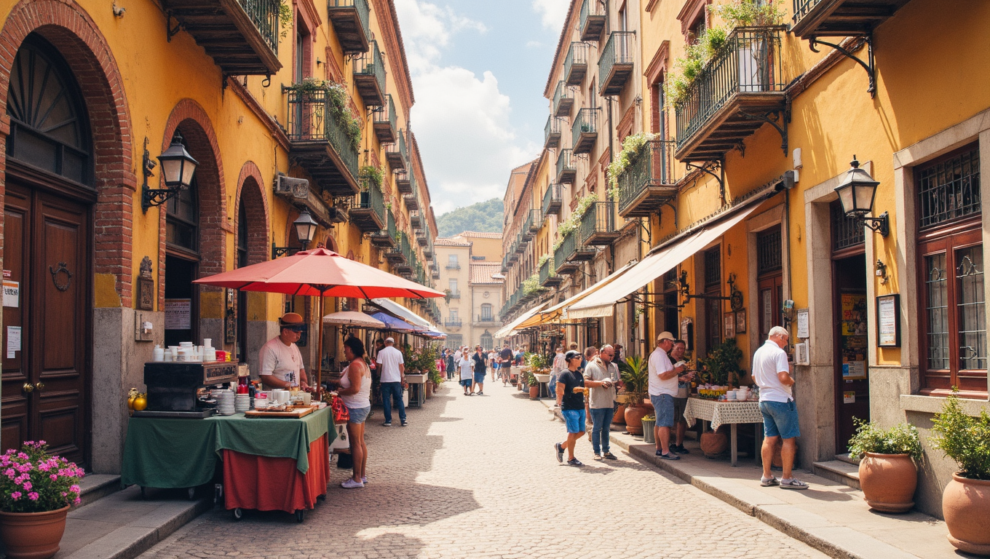


The roots of Spain’s coffee culture are deeply intertwined with the legacy of Moorish rule on the Iberian Peninsula, which lasted for nearly eight centuries from 711 to 1492. Although coffee itself became widespread in Spain later, the Moors introduced the social, agricultural, and intellectual foundations that made its acceptance natural. Their advanced knowledge of botany, irrigation, and trade networks transformed Al-Andalus into a hub of exotic crops, spices, and beverages from the wider Islamic world. This environment prepared Spanish society to embrace coffee not merely as a drink, but as a refined cultural experience.
The Moors were instrumental in shaping Spain’s relationship with stimulating beverages and communal drinking rituals. In the Islamic world, coffee had already gained popularity as a sober alternative to alcohol, enjoyed in places of discussion, learning, and reflection. While direct evidence of coffee consumption in Moorish Spain is limited due to its later spread, the concept of social beverage houses, intellectual gatherings, and leisurely conversation was firmly established. These traditions would later find a natural successor in Spanish cafés, where coffee became central to social life.
Architecturally and aesthetically, Moorish influence left a lasting imprint on Spanish coffee spaces. Courtyards, fountains, tiled walls, and shaded arcades—hallmarks of Islamic design—created environments ideal for calm conversation and contemplation. Many historic cafés in southern Spain echo this legacy, offering intimate, decorative settings that encourage slow enjoyment rather than hurried consumption. The emphasis on atmosphere, comfort, and hospitality reflects Moorish values of welcoming guests and honoring shared moments.
Culinary practices introduced by the Moors also complemented the rise of coffee in Spain. Ingredients such as sugar, cinnamon, almonds, and honey, brought and cultivated during Moorish rule, later became common accompaniments to coffee. Traditional Spanish sweets like turrón, marzipan, and almond pastries owe much to Islamic culinary heritage and pair naturally with coffee. This combination of sweet flavors and strong brews mirrors Middle Eastern coffee customs, subtly preserved in Spanish habits.
Ultimately, the Moorish influence on Spanish coffee habits lies less in the early presence of coffee itself and more in the cultural framework that welcomed it. The Moors shaped Spain’s appreciation for intellectual exchange, refined taste, aesthetic pleasure, and leisurely social rituals. When coffee arrived in Spain in the 17th century, it found a society already inclined toward café culture. Today, every unhurried cup enjoyed in a Spanish café carries echoes of Al-Andalus—where conversation, culture, and contemplation were as important as the drink in hand.