







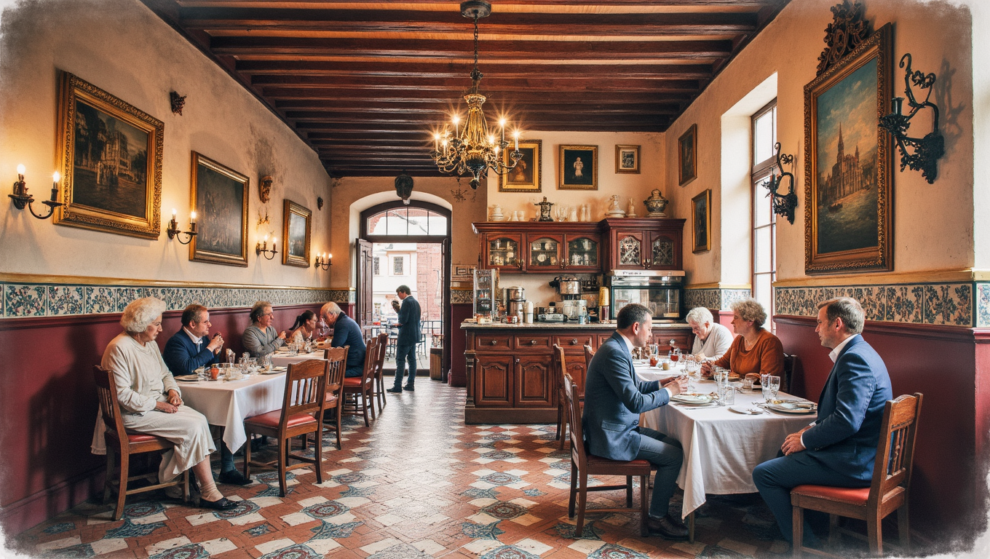


Coffeehouses in 18th-Century Spain
In 18th-century Spain, coffeehouses emerged as vibrant social institutions that reshaped urban life. Introduced earlier through trade with the Ottoman world and Spain’s American colonies, coffee gained popularity during the Enlightenment era, when public discussion and intellectual curiosity were on the rise. Unlike traditional taverns, coffeehouses offered a sober and stimulating environment, attracting scholars, merchants, officials, and artists. Cities such as Madrid, Cádiz, Seville, and Barcelona became home to cafés that buzzed with conversation from morning until late evening.
These coffeehouses quickly turned into informal centers of knowledge and communication. Newspapers, foreign journals, and political pamphlets circulated freely across café tables, allowing patrons to stay informed about events in Spain and across Europe. For many citizens, cafés were the first places where they encountered Enlightenment ideas about reason, science, and social reform. Discussions on philosophy, economics, and governance unfolded alongside chess games and literary readings, making the coffeehouse a classroom without walls.
Madrid, as the capital, led the coffeehouse movement. Famous cafés such as Café de Fonde and Café de Levante became meeting points for writers, playwrights, and civil servants. In port cities like Cádiz, coffeehouses reflected Spain’s global connections, with sailors and traders exchanging news from the Americas and beyond. The presence of diverse social groups gave cafés a democratic character, where rank mattered less than one’s ability to converse and debate intelligently.
Coffeehouses also played a significant role in shaping Spanish literary and journalistic culture. Many early journalists and satirists gathered in cafés to observe society, exchange manuscripts, and critique current affairs. Plays, poems, and essays were often discussed and refined over cups of coffee. Authorities occasionally viewed these spaces with suspicion, aware that cafés could foster dissent, yet their popularity made them difficult to control or suppress.
By the late 18th century, coffeehouses had become embedded in Spain’s cultural fabric. They stood as symbols of modern urban life, intellectual exchange, and social interaction. More than places to drink coffee, these establishments nurtured ideas, friendships, and debates that contributed to Spain’s gradual transition toward modernity, leaving a lasting legacy on Spanish society and its café culture.