





The history of coffee certifications in Brazil reflects the country’s evolving approach to sustainable and ethical coffee production. As the world’s largest coffee producer, Brazil has faced increasing pressure to meet global standards for environmental responsibility, fair labor practices, and quality assurance. Certifications such as Rainforest Alliance and Fairtrade emerged in the late 20th century as mechanisms to guarantee that coffee production adhered to certain social and environmental norms, providing both accountability and market differentiation for Brazilian coffee.
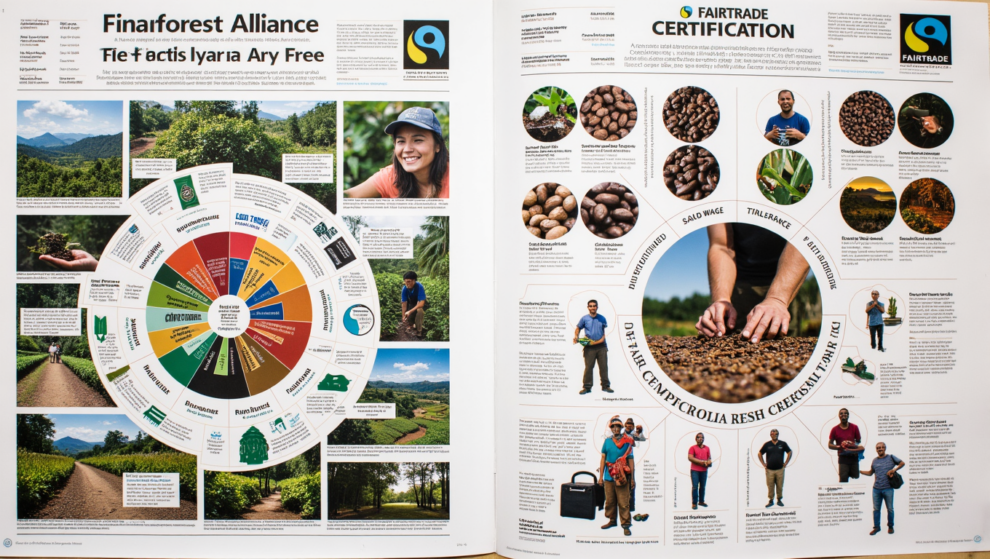
Rainforest Alliance certification made its way into Brazilian coffee farms in the early 2000s, emphasizing environmentally friendly practices and biodiversity conservation. The program required farmers to implement sustainable farming techniques, such as reducing pesticide use, conserving water, and protecting native forests. For Brazil, where large-scale mechanized farms coexist with smallholder plots, this certification helped bridge global environmental concerns with local farming realities, encouraging sustainable practices without sacrificing productivity.
Fairtrade certification followed as an important tool for social responsibility, focusing on the welfare of smallholder farmers. Introduced to Brazil’s coffee sector in the late 1990s and early 2000s, Fairtrade ensured farmers received a minimum price for their coffee, along with a social premium that could be invested in community projects such as schools, healthcare, and infrastructure. For many smallholders in regions like Minas Gerais and Espírito Santo, this certification provided financial stability and empowered them to compete in global markets where quality and ethical standards increasingly mattered.
Over time, Brazilian coffee producers began adopting multiple certifications simultaneously, recognizing that international buyers increasingly valued transparency and ethical sourcing. Programs like UTZ, Organic, and Rainforest Alliance began to overlap, creating a system where farms could highlight both environmental stewardship and social responsibility. The growth of these certifications also influenced local policies, encouraging more sustainable land management and labor practices across the country’s diverse coffee regions.
Today, coffee certifications in Brazil represent a significant evolution in how the industry balances economic growth with social and environmental responsibilities. They have transformed the perception of Brazilian coffee in global markets, allowing consumers to make informed choices while promoting better practices on the ground. From the early adoption of Rainforest Alliance and Fairtrade to the current multi-certification landscape, Brazil continues to lead the way in sustainable coffee production, demonstrating how certifications can reshape an entire agricultural sector.