







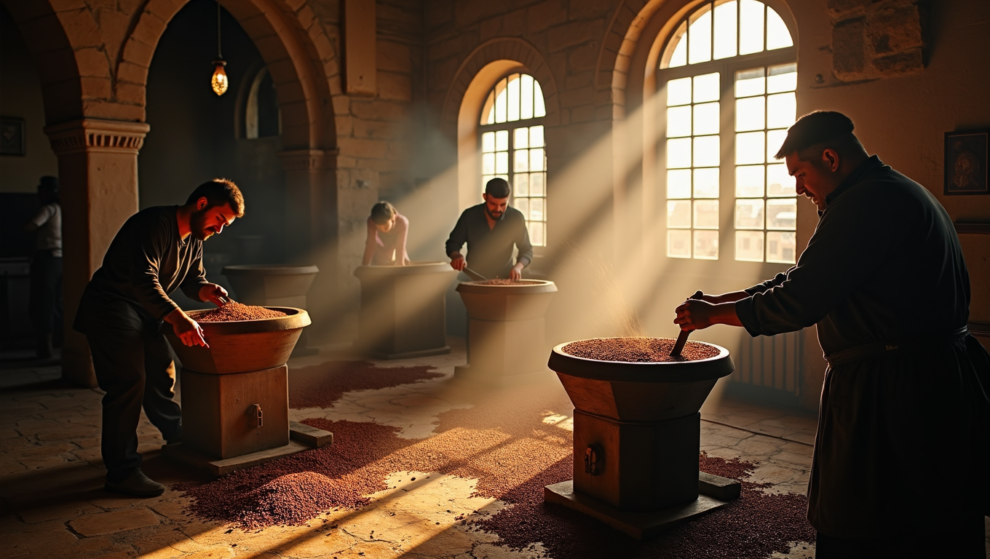


Tahmishanes were among the most fascinating yet often overlooked institutions of historical coffee culture. Emerging during the height of the Ottoman Empire, these specialized coffee grinding houses became the industrial backbone behind the growing popularity of coffee. While cafés attracted attention as lively social spaces, tahmishanes quietly powered the entire system by processing roasted beans into the fine powder required for traditional brewing. Their existence reflected how deeply coffee had already become woven into daily life, commerce, and urban identity.
In major commercial centers such as Istanbul, tahmishanes operated as organized production hubs filled with large mortars, grinding tools, and skilled workers. The rhythmic pounding of beans echoed through neighborhoods, earning these places a reputation for both craftsmanship and energy. Coffee merchants relied on them to maintain consistent quality, while café owners depended on their efficiency to meet increasing customer demand. Without tahmishanes, the expanding café culture of the Ottoman cities would have struggled to keep pace with consumption.
Beyond simple production, tahmishanes represented professional expertise and strict quality control. Skilled artisans understood roasting textures, grinding consistency, and flavor preservation long before modern machinery existed. Coffee beans arriving from distant trade routes were carefully handled to protect aroma and freshness. These grinding houses also supported economic networks by employing workers, regulating supply, and connecting traders with café operators. In many ways, they acted as early examples of organized food processing industries shaped by both tradition and regulation.
Culturally, tahmishanes symbolized the transformation of coffee from an exotic import into an everyday social necessity. Their presence ensured that homes, markets, and coffeehouses could serve freshly prepared drinks that encouraged conversation and community bonding. Today, historians view tahmishanes as more than industrial workshops; they were guardians of craftsmanship and flavor. Their legacy reminds us that behind every cup of coffee lies an entire system of labor, trade, and dedication built to serve society’s enduring love for shared moments over coffee.