







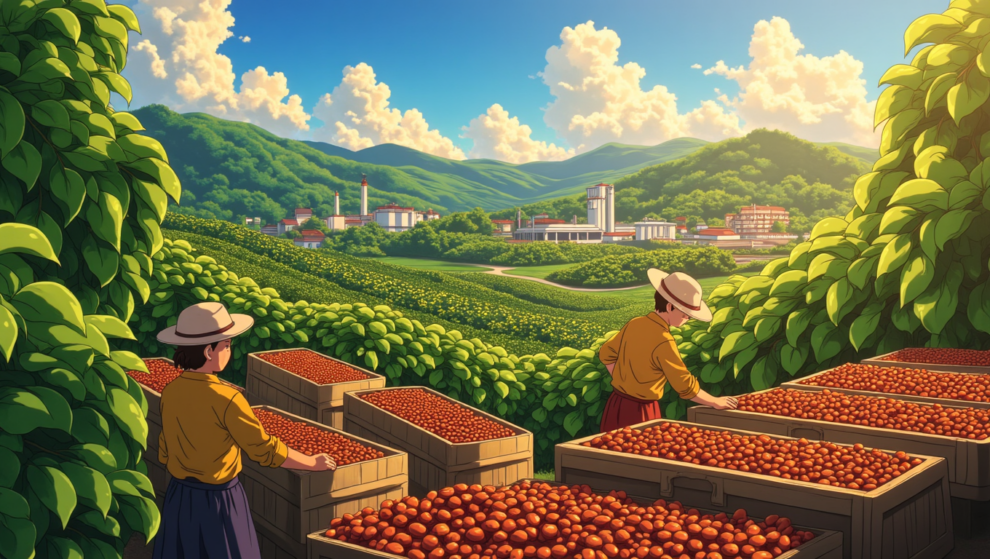


Brazilian coffee production is characterized by a diverse range of producer archetypes, reflecting variations in farm size, technological adoption, and labor practices. On one end of the spectrum are smallholder farmers, often managing just a few hectares of land. These farmers typically rely on manual labor and traditional techniques, cultivating coffee both as a primary income source and for subsistence. Despite their limited scale, smallholders make up a significant portion of Brazil’s coffee landscape, especially in regions like Sul de Minas and parts of Espírito Santo.
Medium-sized farms represent a transitional archetype, combining some mechanization with manual labor. These farms usually cover tens to hundreds of hectares and often adopt modern planting methods, irrigation systems, and selective harvesting techniques. Medium producers benefit from economies of scale that allow for investment in better inputs, training, and partial mechanization, while still retaining flexibility in farm management. They play a crucial role in balancing productivity and sustainability in Brazilian coffee production.
Large-scale coffee plantations, particularly in regions like Cerrado Mineiro, are highly mechanized and capital-intensive. These farms cover hundreds to thousands of hectares and rely on advanced machinery for planting, harvesting, and processing. Labor use is significantly lower than on smaller farms, as machines replace many manual tasks, although seasonal workers may still be required during peak harvest periods. Large producers focus on high yields, efficiency, and export-oriented production, often integrating technology such as drones, sensors, and automated irrigation systems.
Technology adoption varies significantly across these archetypes. Smallholders often lack access to modern tools due to cost constraints but may adopt targeted innovations like improved coffee varieties or mobile-based market information. Medium and large farms, on the other hand, integrate precision agriculture, mechanized harvesting, and digital monitoring to optimize productivity and reduce environmental impact. This technological gradient highlights the link between farm size, resource availability, and production strategy.
Overall, the diversity of coffee producer archetypes in Brazil illustrates a complex and adaptive industry. Smallholders maintain cultural and regional coffee traditions, medium-sized farms bridge efficiency with sustainability, and large plantations drive high-volume exports. Understanding these archetypes is crucial for policymakers, cooperatives, and agribusinesses aiming to support growth, innovation, and equitable development within Brazil’s coffee sector.