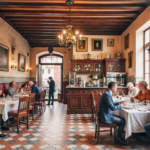








The legacy of coffee houses stretches far beyond the aroma of freshly brewed coffee—it is a legacy of ideas, community, and cultural transformation. From their early beginnings in the Middle East to their expansion across Europe and the rest of the world, coffee houses have left a lasting imprint on society. They became places where strangers turned into friends, where thinkers shaped revolutions, and where creativity found a welcoming home. The story of coffee houses is not just about a beverage, but about the powerful human desire to gather, discuss, and dream.
Historically, coffee houses influenced the development of journalism, finance, literature, and political thought. In 17th and 18th century Europe, many newspapers were born in coffee houses, and institutions like stock exchanges and insurance markets trace their origins to these lively meeting spots. Writers, philosophers, scientists, and merchants exchanged ideas that helped shape the Enlightenment and modern economic systems. These establishments encouraged open dialogue and intellectual freedom at a time when such spaces were rare. Their impact on public opinion and social progress created a foundation that still influences modern democratic and cultural life.
Today, the legacy of coffee houses continues in both traditional cafés and contemporary coffee chains. Modern coffee shops serve as study areas, business meeting places, creative studios, and social hubs. Even in the digital age, where communication often happens online, coffee houses remain symbols of face-to-face connection and community spirit. Their enduring presence proves that while societies evolve, the need for shared spaces remains constant. The legacy of coffee houses reminds us that simple places can spark great ideas—and that over a cup of coffee, history can quietly be made.