









Ancient coffee traditions offer a fascinating glimpse into how a simple berry transformed into a powerful cultural symbol. Long before coffee became a global commodity, it was deeply rooted in the daily lives and spiritual practices of communities in East Africa and the Arabian Peninsula. In Ethiopia, where coffee is believed to have originated, traditional coffee ceremonies remain an important social ritual even today. These ceremonies involve roasting green beans over an open flame, grinding them by hand, and brewing the coffee in a clay pot called a jebena. The process is slow, intentional, and communal—emphasizing hospitality, respect, and connection.
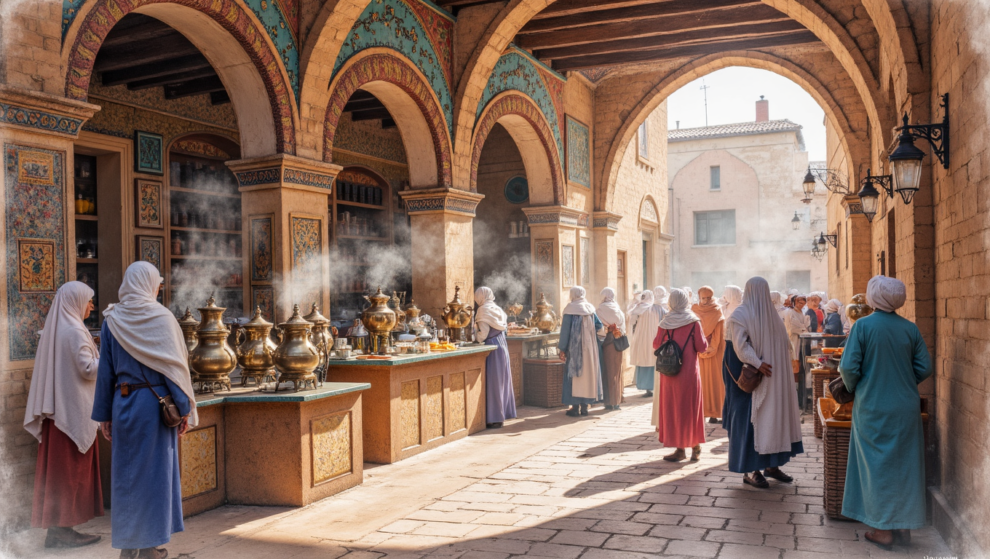
As coffee spread to Yemen and other parts of Arabia in the 15th century, ancient coffee traditions took on religious and social importance. Sufi monks drank coffee to stay awake during long hours of prayer and meditation, believing it enhanced spiritual focus. Soon, coffeehouses known as qahveh khaneh appeared in cities like Mecca and Cairo. These establishments became vibrant centers of conversation, storytelling, music, and intellectual exchange. Coffee was not merely consumed for its taste; it became a symbol of unity, learning, and cultural identity.
Across different regions, ancient coffee traditions reflected local customs while preserving the core idea of gathering and sharing. In the Ottoman Empire, Turkish coffee was carefully prepared in small pots and served with great etiquette, often accompanied by sweets and meaningful conversation. The preparation itself was considered an art form. These early traditions laid the foundation for modern coffee culture, proving that coffee has always been more than just a beverage—it has been a bridge between people, generations, and civilizations.