







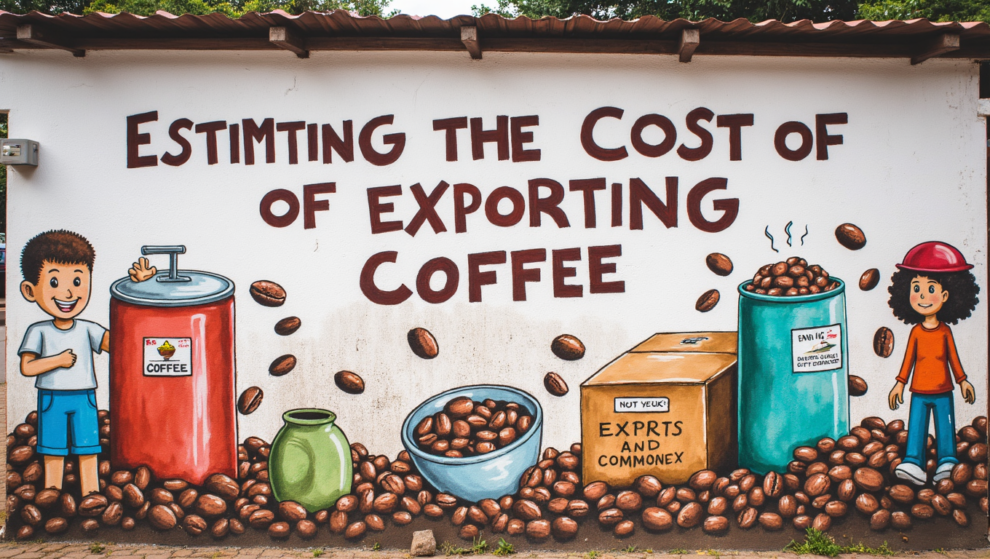


Estimating the cost of exporting coffee involves many factors, and the reality is that prices rarely depend on beans alone. Beyond the farm-gate price, exporters must account for processing, grading, packaging, and storage, all of which vary by origin and quality standards. Logistics play a major role—transport from inland farms to ports, container availability, fuel prices, and international freight rates can significantly raise costs. In addition, exporters face expenses for certifications, customs documentation, insurance, and quality inspections, which are often underestimated at the planning stage.
The real challenge is that coffee export costs are dynamic, not fixed. Currency fluctuations, climate-related supply changes, port congestion, and sudden shifts in global demand can alter costs within weeks. Small exporters often feel these pressures more strongly, as they lack the scale to negotiate better shipping or financing terms. In reality, successful coffee exporting requires not only cost calculation but also risk management, long-term buyer relationships, and flexibility—because in the coffee trade, certainty is rare and adaptability is essential.
Total Export Cost (TEC)TEC=(Raw Coffee Cost)+(Processing & Grading)+(Packaging)+(Inland Transport)+(Port & Handling Charges)+(Documentation & Certification)+(International Freight)+(Insurance)+(Financing & Risk Buffer)
Simplified Per-Kilogram Formula
Export Cost per kg=Total Export Weight (kg)TEC
Reality Adjustment (Volatility Factor)
To reflect real-world uncertainty:Adjusted Cost=Export Cost per kg×(1+Risk Factor)
Where Risk Factor typically ranges from 5%–15% depending on market volatility, currency risk, and logistics reliability.