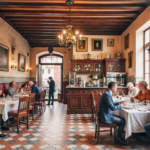
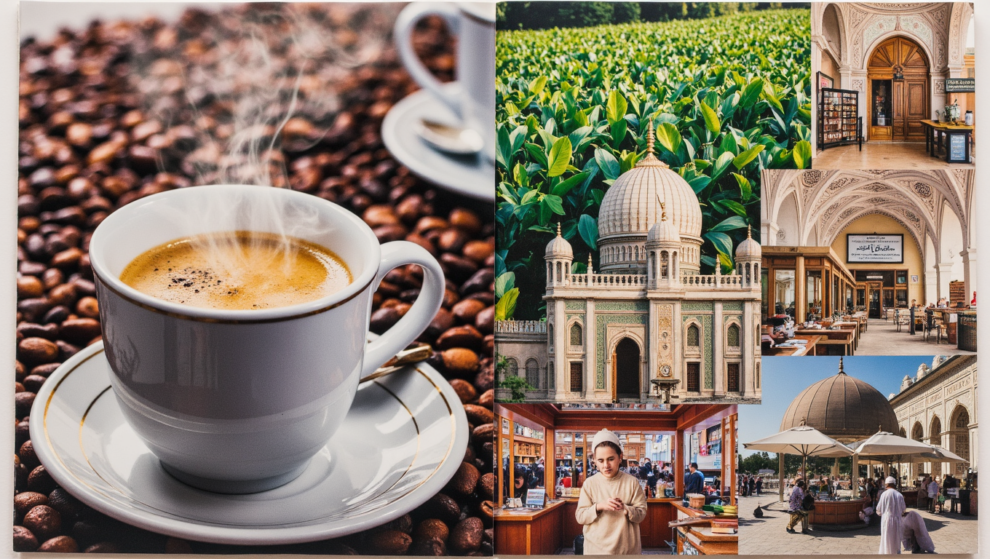
Coffee’s deep connection with the Islamic world began long before it reached Europe. Although the exact moment when coffee beans were first brewed as a beverage remains unknown, historical records show that coffee drinking became widespread across the Islamic world by the 16th century. Originating in the highlands of Ethiopia and traveling through Yemen, coffee found a natural home in Muslim societies, where it was valued for its ability to sharpen the mind during long nights of prayer, study, and discussion. From Mecca and Medina to Cairo, Damascus, and Istanbul, coffeehouses emerged as vibrant social spaces where scholars, merchants, poets, and travelers gathered to exchange ideas. Despite occasional religious debates and bans, coffee proved impossible to suppress; it blended seamlessly into daily life and ritual, becoming not just a drink but a cultural force that shaped intellectual, social, and spiritual life throughout the Islamic world.
Country
Population (approx., 2025)
Coffee Consumption Trend
Per-Capita Coffee Consumption (kg/year or cups)
Turkey
~85.4 M
High overall consumption and strong traditional coffee culture (Turkish coffee)
Per-capita consumption among higher in Arab region stepfeed.com
Syria
~19.5 M
Traditional coffee culture persists
Significant market volume among MENA nations IndexBox
Although the exact moment when coffee beans were first brewed into a beverage remains uncertain, historical accounts consistently point to the 16th century as the period when coffee drinking became a prominent and widespread practice in the Islamic world. Its rise was particularly notable in Yemen, where Sufi monks used coffee to sustain long nights of prayer and meditation, highlighting the beverage’s early association with focus and spiritual alertness. From Yemen, coffee’s influence quickly spread to major cultural and commercial centres such as Mecca, Cairo, and Istanbul, where it transcended religious circles to become a social staple. Coffeehouses began emerging as gathering places where people exchanged ideas, debated poetry, discussed politics, and conducted business, signalling that the drink had evolved beyond mere sustenance into a central feature of daily life. By the latter half of the 16th century, coffee had firmly embedded itself into the fabric of Islamic society, laying the foundation for a global cultural phenomenon that would later sweep across Europe and the rest of the world.