







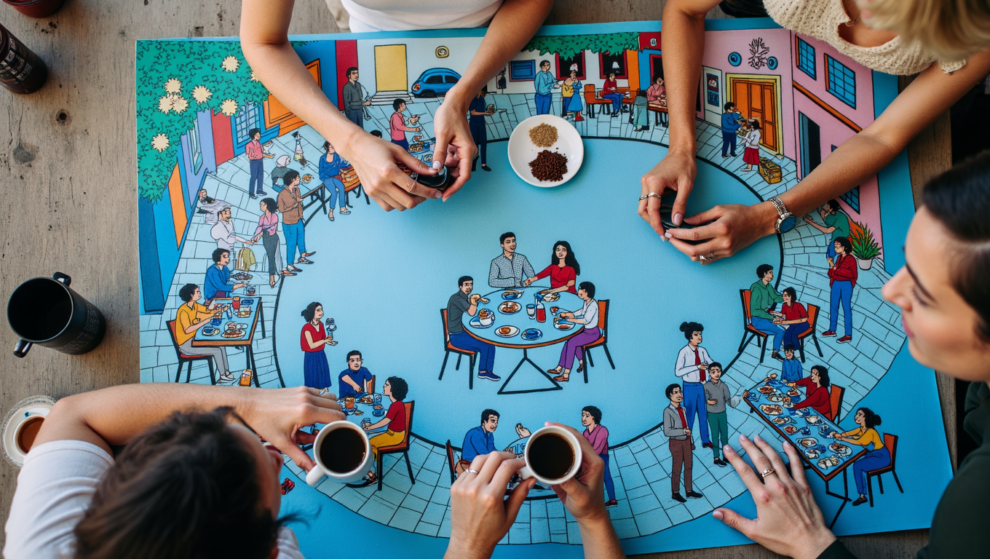


Coffee as a Social Equalizer in Spain
In Spain, coffee is far more than a beverage—it is a shared social experience that quietly dissolves barriers of class, profession, age, and status. Whether served in a humble neighborhood bar or a stylish city café, coffee functions as a powerful social equalizer, bringing people together on common ground. The simple act of “tomar un café” reflects Spain’s deeply rooted culture of openness, conversation, and everyday human connection.
Historically, Spanish cafés have been among the most democratic public spaces in the country. From the late nineteenth century onward, cafés were frequented by workers, intellectuals, artists, merchants, and politicians alike. A construction worker and a university professor could sit at adjacent tables, both ordering a café solo at the same price, sharing the same space without formal division. Unlike exclusive clubs or private dining rooms, cafés were accessible to everyone. This accessibility allowed coffee to become a social ritual that crossed economic and social lines naturally and consistently.
One of the strongest equalizing aspects of coffee culture in Spain is its affordability and simplicity. A cup of coffee is inexpensive and widely available, from rural villages to major cities. There is little pressure to order elaborate or costly drinks; most people choose familiar options such as café con leche, cortado, or café solo. This shared simplicity reinforces the idea that status is irrelevant in the café setting. Everyone stands at the bar, waits their turn, and engages in casual conversation, reinforcing social equality through routine behavior.
Coffee also equalizes through conversation. Spanish cafés are places where dialogue flows freely—about football, politics, local issues, or daily life. Titles and formalities often disappear once people sit down with a cup of coffee. First names replace professional labels, and opinions are exchanged openly. These conversations help flatten social hierarchies, allowing people to be heard regardless of background. In many ways, coffee provides a neutral space where social differences are softened and mutual respect is reinforced.
In modern Spain, coffee continues to play this role despite changes in lifestyle and urbanization. While specialty cafés and modern coffee trends have emerged, the core social function remains intact. Students, freelancers, retirees, tourists, and office workers all share the same café spaces. Morning breakfast bars, mid-day coffee breaks, and late afternoon sobremesa moments still attract diverse groups, maintaining the café as a meeting point for all segments of society.
Coffee also serves as a bridge between generations. Elderly patrons sipping their morning coffee often share space with young professionals working on laptops or students meeting friends. This intergenerational coexistence is natural and unforced, reinforcing social continuity and mutual visibility within communities.
Ultimately, coffee in Spain is a quiet but powerful symbol of social balance. It creates moments where differences fade, conversations begin, and community takes shape. In a society where social bonds are highly valued, coffee remains one of the simplest and most effective ways to bring people together as equals—one cup at a time.