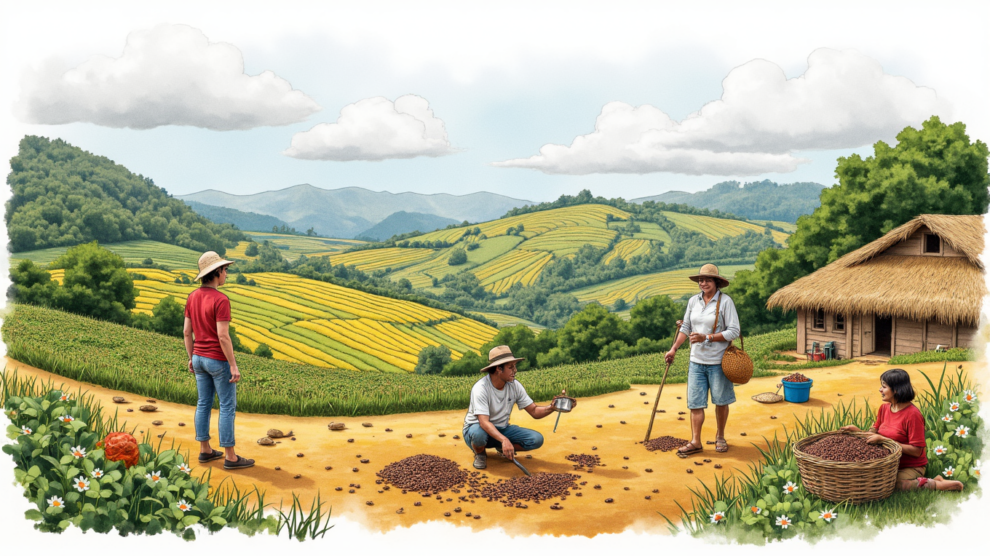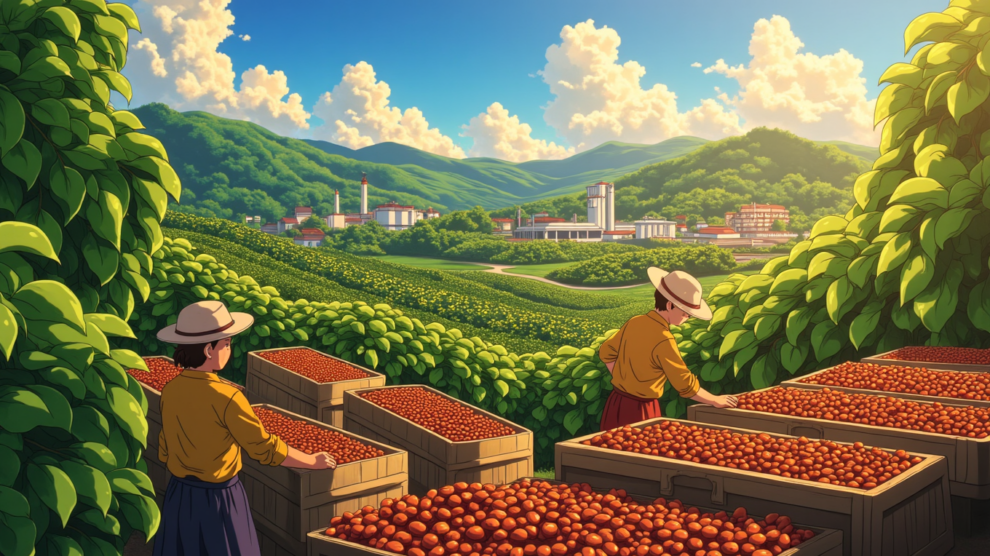








The evolution of coffee acreage in Brazil reflects the country’s dynamic agricultural development and its position as the world’s leading coffee producer. In the 1960s, Brazil’s coffee farms were relatively concentrated in the southeastern states, primarily Minas Gerais, São Paulo, and...

Layout A (with pagination)
Cooperatives have long played a pivotal role in supporting smallholder coffee farmers in Brazil, offering them access to resources and markets that would be difficult to reach individually. For many small-scale farmers, joining a cooperative provides the opportunity to pool resources for...
Brazilian coffee production is characterized by a diverse range of producer archetypes, reflecting variations in farm size, technological adoption, and labor practices. On one end of the spectrum are smallholder farmers, often managing just a few hectares of land. These farmers typically...
Extra-small family farms in Brazil, typically spanning less than five hectares, form a crucial yet vulnerable segment of the country’s coffee industry. These farms are often managed entirely by family members, relying heavily on manual lobar for planting, maintenance, and harvesting...
What is disadvantage of manual labour? Family farms have traditionally relied on manual labour, often passed down through generations, where hands-on care and knowledge of the land shape the farming process. In many countries, including Brazil, smallholder farmers manage a few hectares...