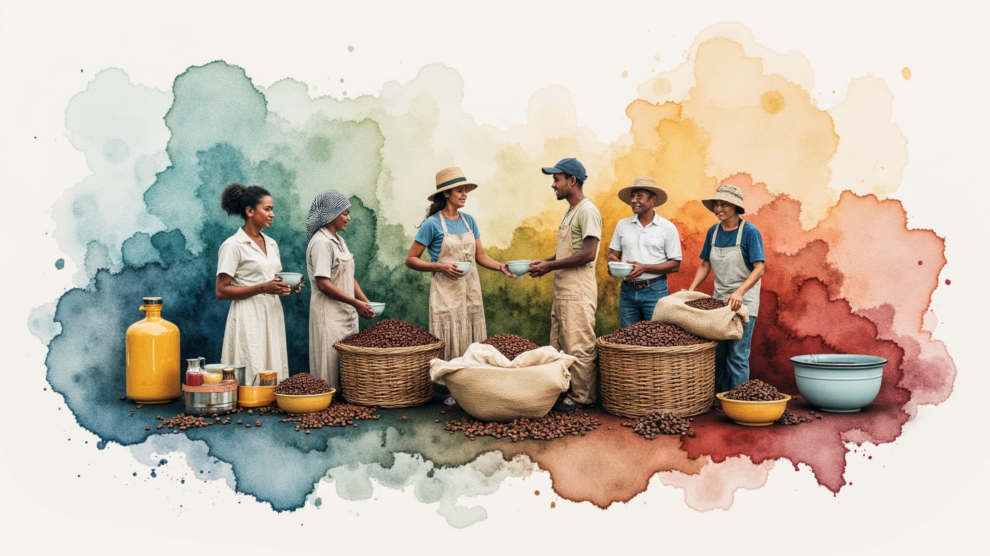








Brazil’s coffee sector is a mosaic of small family farms and large-scale commercial plantations, and the income dynamics reflect this diversity. Smallholders, often farming just a few hectares, rely heavily on family labor and traditional cultivation methods. Their income is closely tied...
Layout A (with pagination)
Brazil’s coffee industry is globally renowned, but the journey from farm to international market is far from simple. The process of collecting and exporting coffee involves a complex network of stakeholders, logistics, and regulatory requirements. Each coffee farm, whether a smallholder...
Estimating the cost of exporting coffee from Brazil is a complex task due to the country’s diverse production landscape. Coffee farms in Brazil range from tiny family-run plots to vast mechanised plantations, each with different harvesting, processing, and transportation methods. This...
Brazil’s coffee industry is supported by a complex network of stakeholders, each playing a crucial role in moving beans from farms to international markets. The coffee value chain is not limited to farmers alone; it includes traders, cooperatives, and exporters, all of whom interact to...
Brazil’s coffee industry is shaped by a wide range of participants, from smallholder farmers managing a few hectares to large-scale exporters handling millions of bags each year. These two groups operate on very different scales, with contrasting resources, goals, and challenges...