







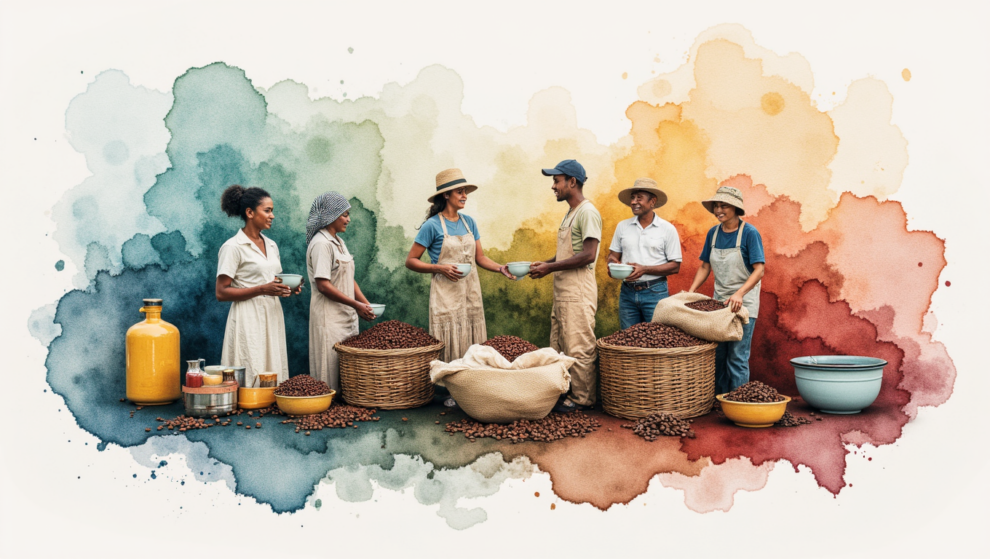


Brazil’s coffee industry is supported by a complex network of stakeholders, each playing a crucial role in moving beans from farms to international markets. The coffee value chain is not limited to farmers alone; it includes traders, cooperatives, and exporters, all of whom interact to ensure that Brazilian coffee reaches consumers worldwide. This diversity of actors allows Brazil to manage one of the largest coffee industries in the world efficiently, but it also introduces layers of complexity in coordination, quality control, and pricing.

Local traders are often the first link between coffee farmers and the broader market. Smallholder farmers frequently sell their harvested beans to these traders, who consolidate coffee from multiple producers to create larger, exportable lots. Traders are essential for providing farmers with immediate cash flow and market access, especially in regions where direct access to cooperatives or exporters is limited. Their role in quality assessment and pricing is critical, as they help determine which coffee beans are suitable for sale domestically or for export.
Cooperatives offer another important pathway for coffee to reach global markets. Many small farmers join cooperatives to pool their resources, improve bargaining power, and share access to processing facilities. Cooperatives often manage the collection, drying, and storage of coffee, ensuring consistent quality standards that meet international requirements. By centralizing operations, cooperatives help reduce costs, improve efficiency, and provide farmers with a more stable income, while also supporting the traceability and certification processes demanded by buyers abroad.
Exporters serve as the final stage in the chain, connecting Brazilian coffee to global buyers. They handle the logistics, regulatory compliance, and shipping necessary for international trade. Exporters must navigate fluctuating market prices, transportation challenges, and trade regulations to ensure timely delivery of coffee to destinations worldwide. Their expertise in international markets helps Brazilian coffee remain competitive, while also providing guidance to traders and cooperatives on meeting the quality and volume expectations of foreign clients.
The interplay of traders, cooperatives, and exporters highlights the complexity and resilience of Brazil’s coffee value chain. Each stakeholder contributes specialized knowledge and resources, enabling the country to maintain its leadership in the global coffee industry. Understanding these diverse roles emphasizes that Brazil’s coffee success is not only the result of abundant production but also the result of careful coordination, collaboration, and adaptation across a multi-layered supply chain.