







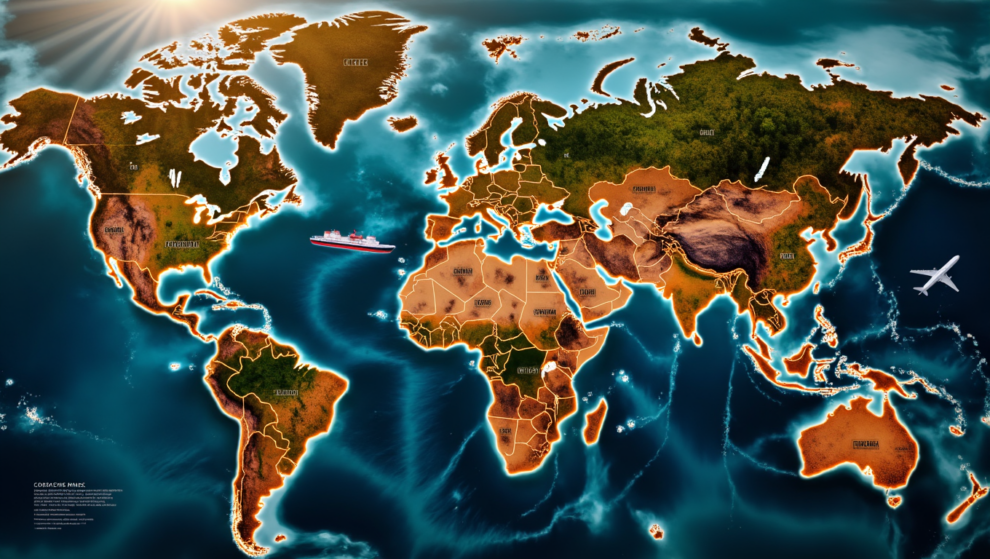


We have an idea that fossil fuel is the source of energy of our civilisation. But do we know that Coffee is more than just a morning drink—it is a global powerhouse? After crude oil, coffee stands among the most traded commodities in the world, linking millions of farmers, exporters, traders, and consumers across continents. Its journey from remote mountain farms to cafés in bustling cities tells a story of culture, economics, and human connection.
A Lifeline for Millions of Farmers
Cultivating coffee is passion and profitable. For more than 25 million farming families, coffee is their main source of income. Many of these farmers live in developing countries where coffee cultivation supports local communities, education, and healthcare. A good harvest year means better livelihoods, while a poor harvest—due to pests, drought, or climate change—can affect entire regions. Unlike oil, which is found beneath the earth, coffee is grown on farms and depends heavily on weather conditions. Temperature, rainfall, soil quality, and altitude all affect bean quality.
Overall, about 125 million people depend on coffee for their livelihoods globally — including farmers and workers throughout the coffee value chain. According to the International Energy Agency (IEA), the global oil & gas industry employed about 11.5 million people in 2022 — of which roughly 7.6 million worked primarily in oil (as opposed to natural gas) around the world.
Coffee Shop
- North America (USA + Canada) — ~40,000–50,000 outlets. The U.S. alone is reported to have 40,000+ coffee shops. Toast POS
- Europe — ~50,000–120,000 outlets. World Coffee Portal reports the branded European market at ≈51,042 outlets (2024), while many independents and small cafés add substantially to that total. World Coffee Portal
- East Asia (China, South Korea, Japan, Taiwan, etc.) — ≈120,000–160,000+ outlets. East Asia branded outlets alone were reported to exceed ~136,500 by late-2024. Rapid expansion in China & Korea is a major driver. foodtalks.cn+1
- South & Southeast Asia (India, Indonesia, Vietnam, Thailand, etc.) — ~30,000–90,000 outlets. India’s branded market is growing fast (Project Café India: several thousand branded stores), and other regional markets are expanding quickly. World Coffee Portal+1
- Latin America — ~30,000–80,000 outlets. Large populations and strong coffee culture (Brazil, Mexico, Argentina, Colombia) give substantial café counts, though reporting is fragmented. Grand View Research
- Africa & Middle East — ~10,000–40,000 outlets. Urbanization and RTD/ café growth are accelerating in key markets (South Africa, Morocco, Kenya, etc.). Mordor Intelligence+1
- Oceania (Australia, New Zealand) — ~5,000–15,000 outlets. Strong café culture but smaller populations.
Grand total (sum of ranges): roughly 250k–450k global coffee shops (rounded and approximate). This aligns with multiple market reports that place the global coffee-shop market in the hundreds of billions of USD and show sustained outlet growth.
Petrol Pump
What we do know
- In 2023, FuelsEurope — an industry group — reported over 137,000 petrol stations across the European Union + Norway + UK + Switzerland + Turkey alone. FuelsEurope+1
- In major large countries: for example, as of a few years ago, the US Census Bureau counted ~114,474 fuel (gas) stations in the United States (though that number is dated). Wikipedia+1
- Some industry-market reports describe the global “fuel station / gas station” market as including “millions of retail-outlet equivalents” — but those often include more than just standard petrol stations (e.g. convenience-stores, diesel pumps, multi-fuel stations). Market Reports World+2Archive Market Research+2
Comparison Table — Coffee Shops vs. Petrol Pumps (Major Countries)
| Country | Estimated Coffee Shops | Estimated Petrol Pumps |
|---|---|---|
| United States | ~40,000+ | ~115,000 |
| Canada | ~7,000–10,000 | ~12,000 |
| United Kingdom | ~25,000 | ~8,000 |
| Germany | ~30,000–40,000 | ~14,000 |
| France | ~15,000–20,000 | ~11,000 |
| Italy | ~60,000 cafés (traditional) | ~21,000 |
| Brazil | ~13,000–20,000 | ~40,000 |
| Mexico | ~8,000–12,000 | ~12,000 |
| India | ~4,000–10,000 (rapid growth) | ~80,000–90,000 |
| China | ~130,000+ (fastest-growing) | ~100,000+ |
| Japan | ~60,000+ | ~30,000 |
| South Korea | ~80,000+ (very dense market) | ~12,000 |
| Australia | ~10,000–15,000 | ~6,500 |
| Saudi Arabia | ~7,000–9,000 | ~12,000 |
| United Arab Emirates | ~3,000–5,000 | ~800–1,000 |