







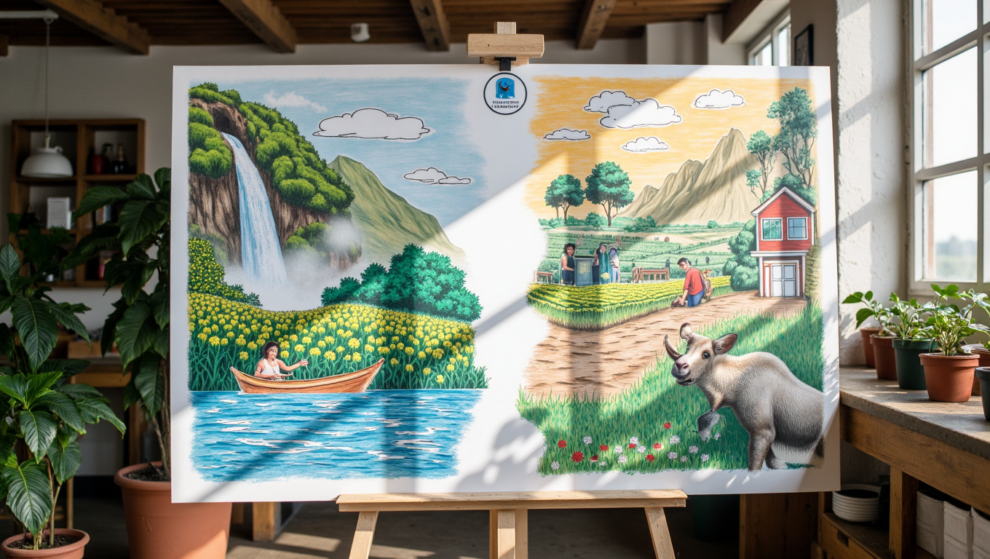


Coffee certifications in Brazil have a relatively recent but impactful history, reflecting the country’s growing commitment to sustainable and ethical coffee production. As the world’s largest coffee producer, Brazil faced increasing pressure from international markets to ensure that its coffee met environmental and social standards. The first wave of certifications emerged in response to concerns about deforestation, pesticide use, and labor conditions, prompting initiatives like the Rainforest Alliance to enter the Brazilian coffee sector in the late 1990s and early 2000s.
Rain-forest Alliance certification quickly became one of the most recognised standards in Brazil. It focused primarily on environmental sustainability, encouraging coffee farmers to adopt practices that protected biodiversity, reduced chemical use, and preserved natural habitats. While initially met with some scepticism by smallholder farmers, over time, Rain forest Alliance helped create awareness of the benefits of sustainable farming, including access to premium markets and the potential for higher income through certified coffee sales.
Following this, Fairtrade certification emerged as a complementary standard, emphasizing social equity and fair pricing for coffee producers. Fairtrade targeted smallholder cooperatives, guaranteeing minimum prices and social premiums that could be reinvested in local communities. In Brazil, this certification found a strong foothold among family-run farms and cooperatives, particularly in regions like Minas Gerais and Espírito Santo, where small-scale production is more prevalent. The Fairtrade movement helped bring attention to the human element of coffee production, including workers’ rights, fair wages, and community development.
Over the years, Brazil has also seen the rise of other certifications, such as UTZ (now integrated with Rainforest Alliance) and organic labels. These certifications reflect a nuanced approach, combining environmental sustainability, social responsibility, and market competitiveness. The expansion of these programs demonstrates Brazil’s adaptation to global consumer trends, where buyers increasingly demand traceability, ethical sourcing, and quality assurances from coffee producers.
Today, certified coffee represents a significant and growing portion of Brazil’s coffee exports. The history of coffee certifications in Brazil illustrates a transition from purely production-focused practices toward a holistic model that integrates ecological stewardship, social justice, and economic sustainability. This evolution has not only helped Brazilian coffee maintain its leadership in the global market but has also set a precedent for other producing countries seeking to balance profitability with responsible practices.